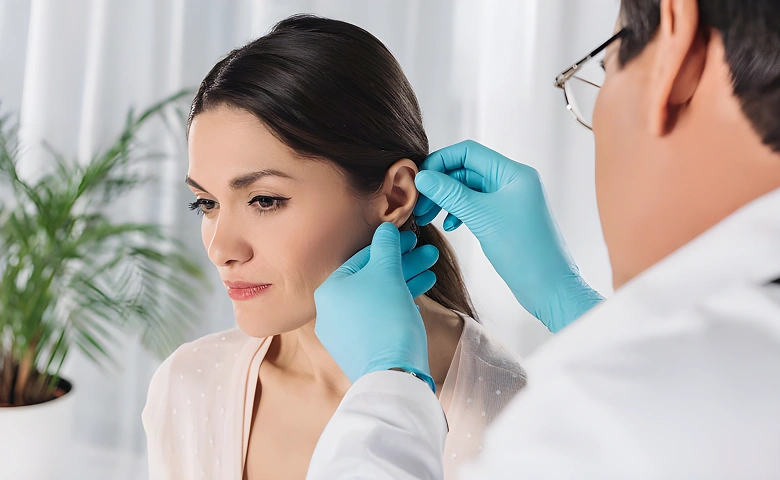
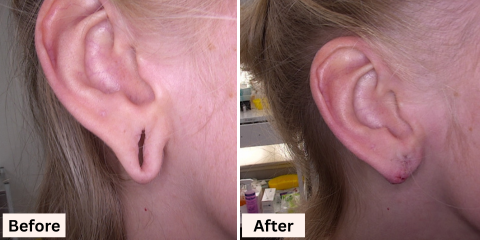
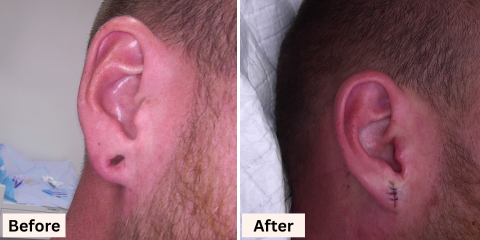
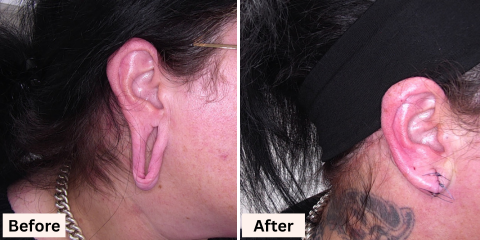
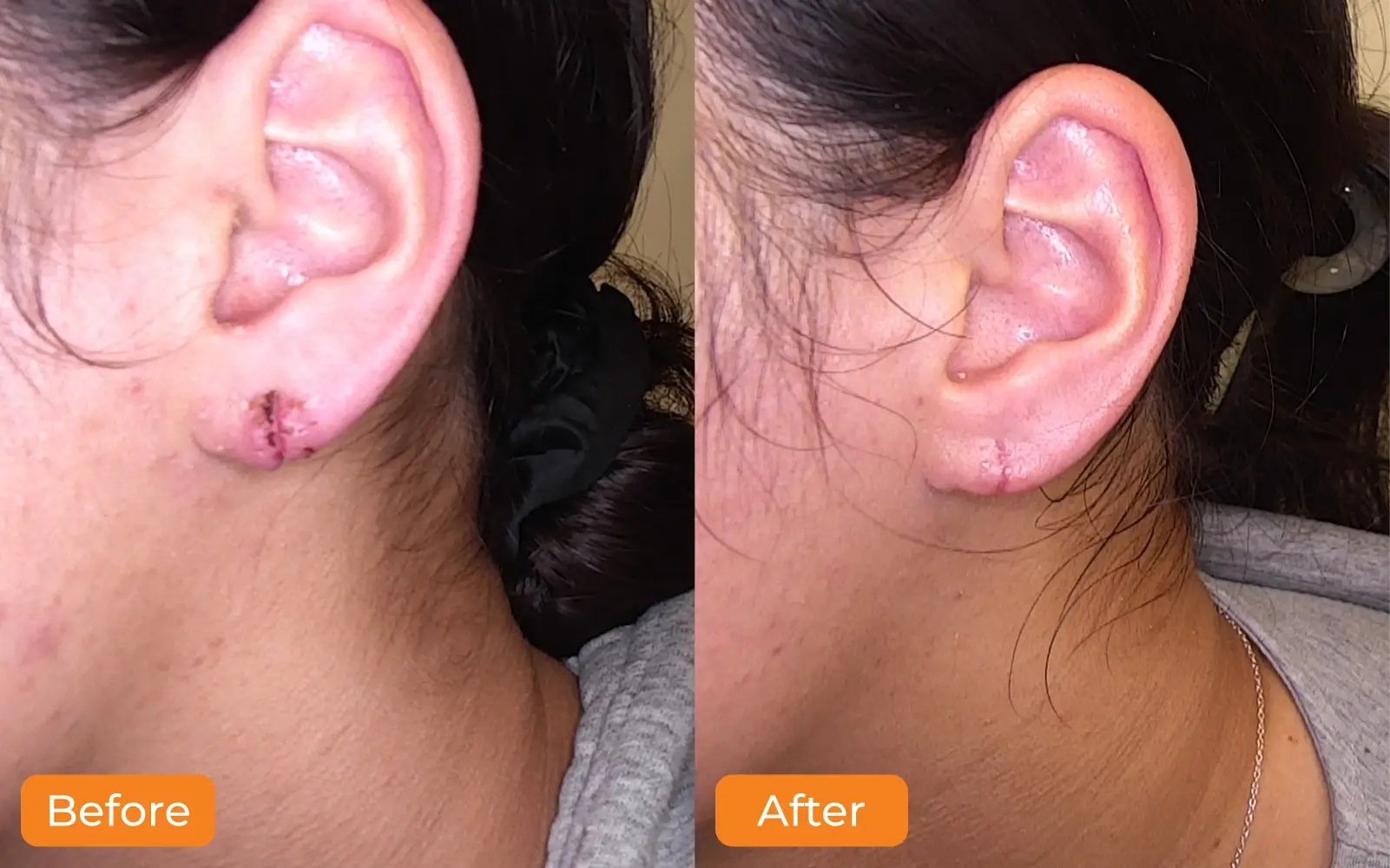
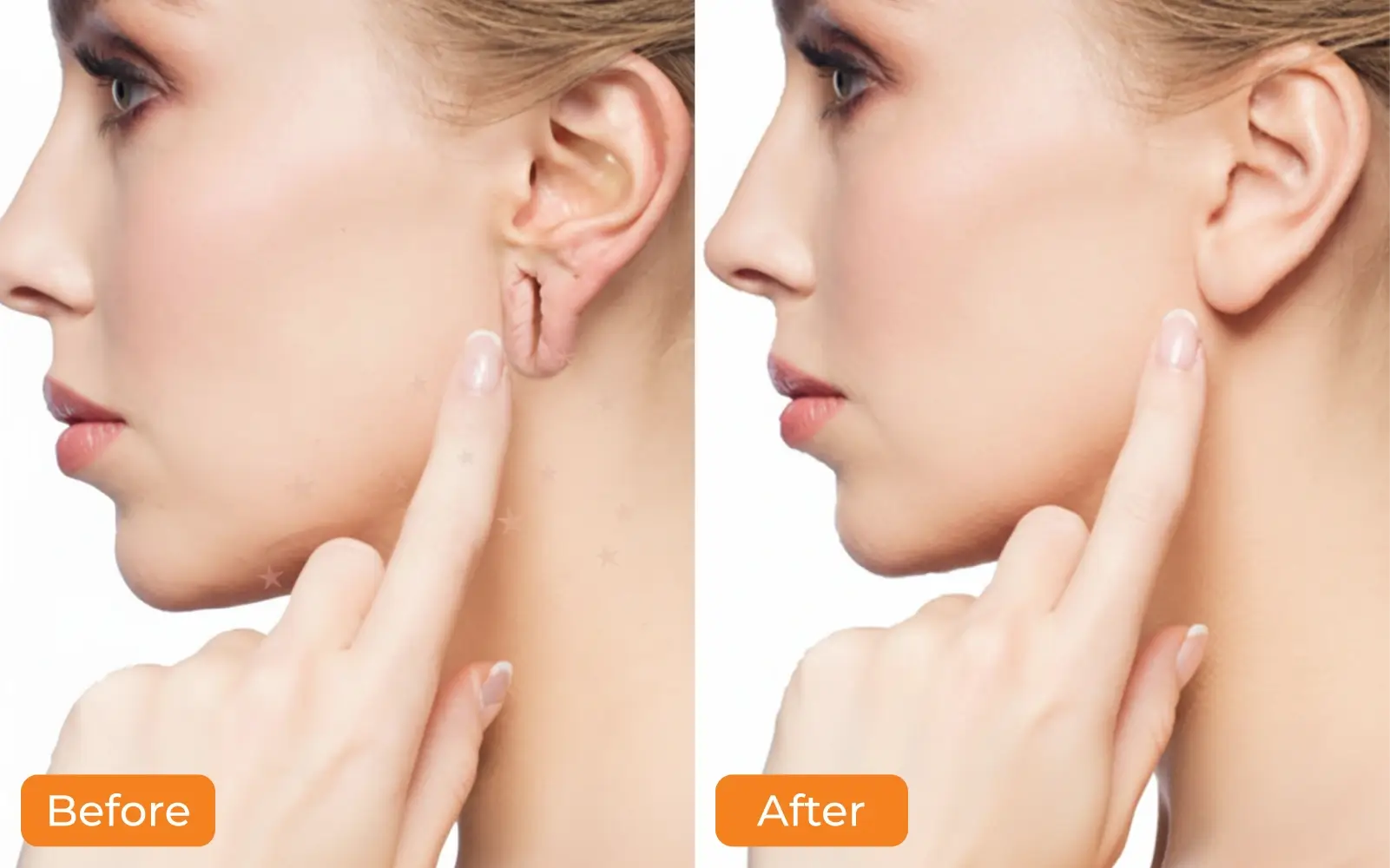
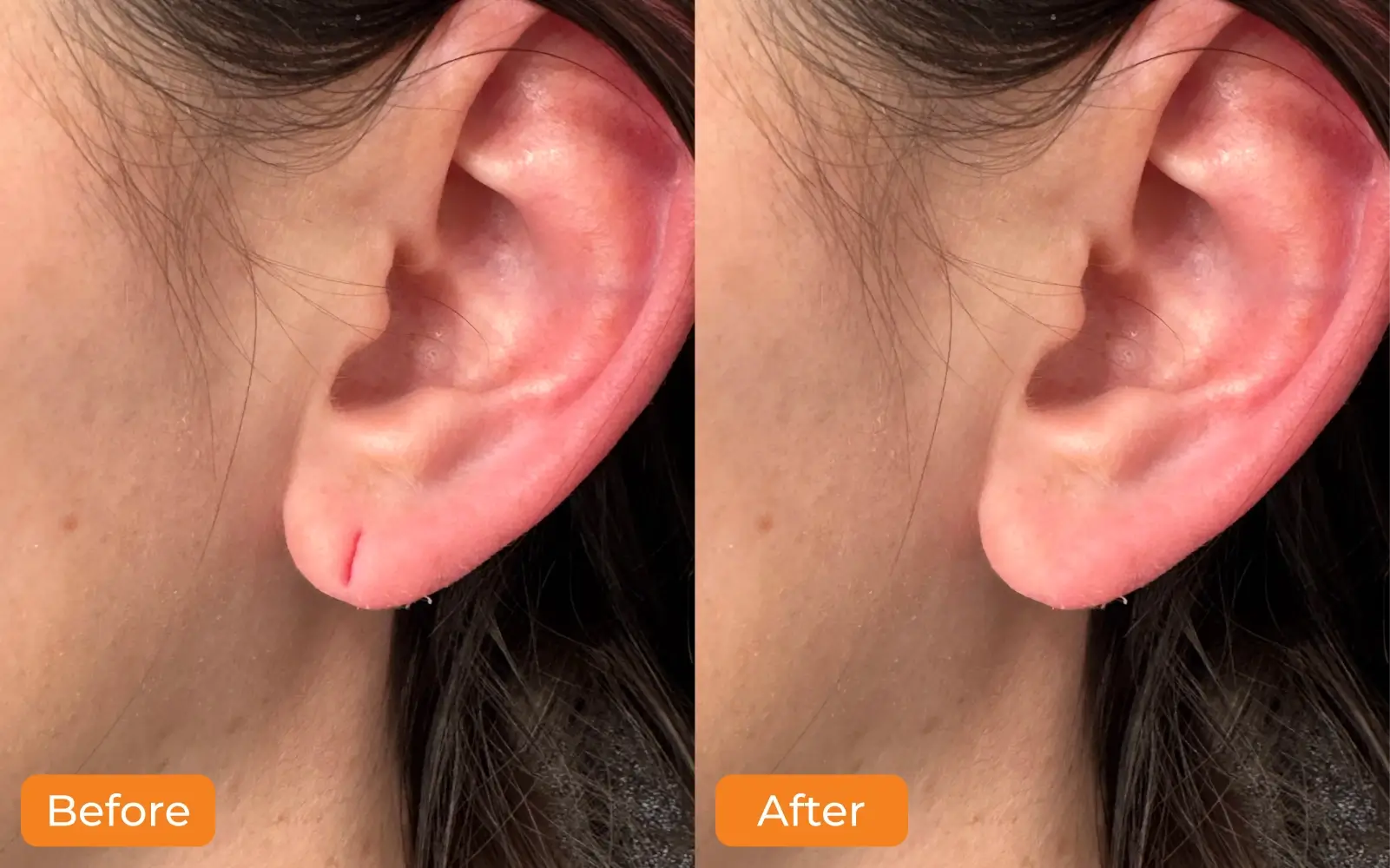
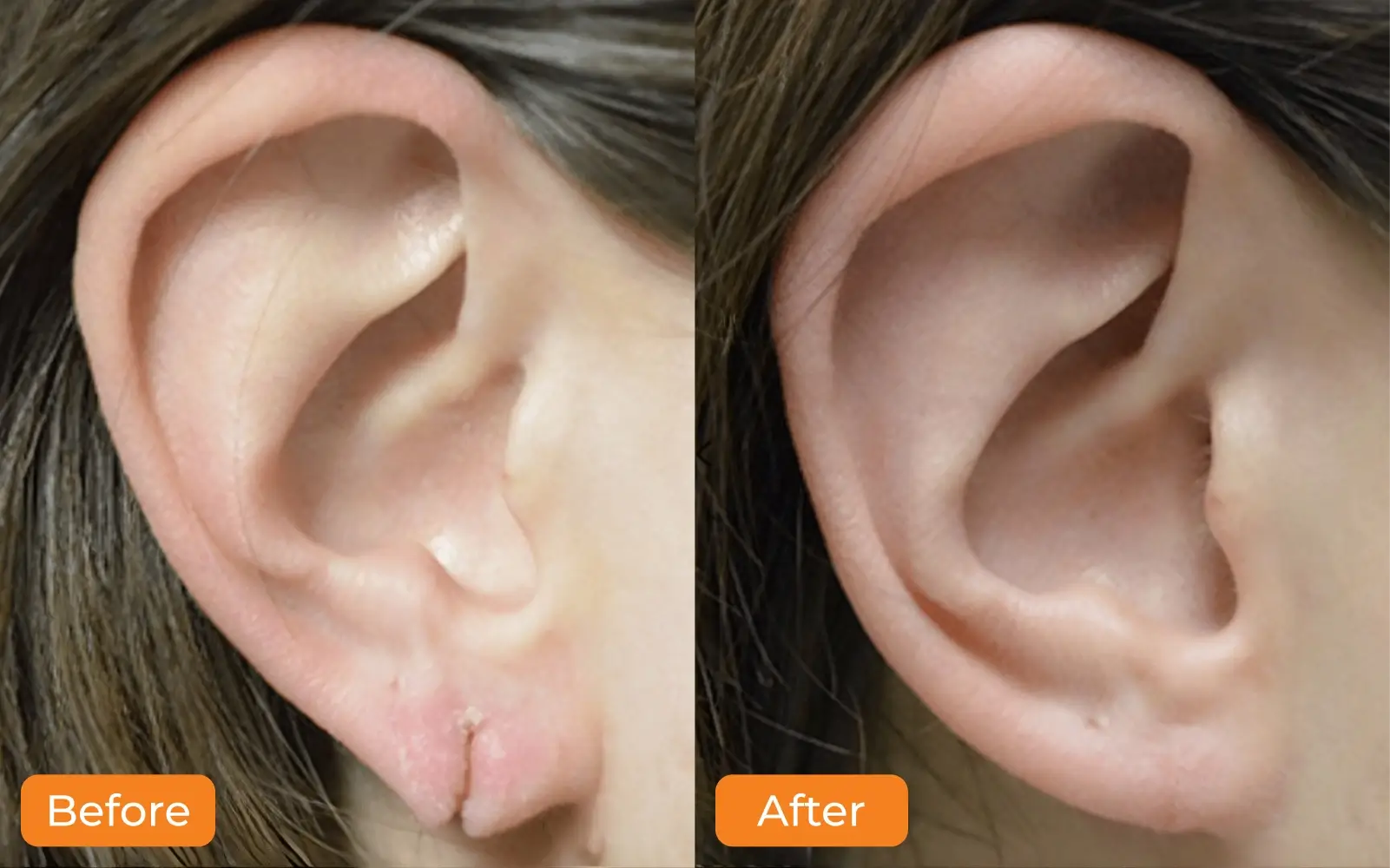
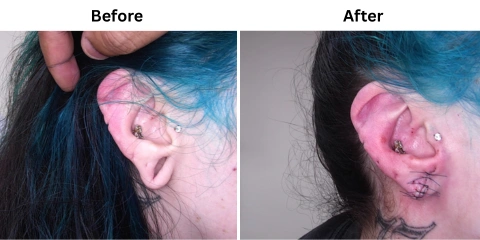
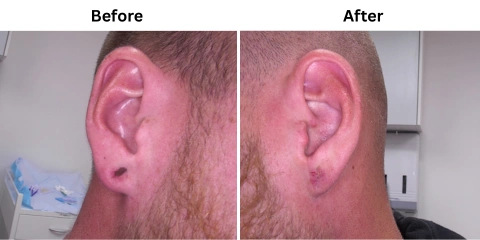
At Advanced Skin Doctors, we offer simple, effective ear lobe repair surgery in Melbourne for stretched, torn, or damaged ear lobes. Whether it’s from years of wearing heavy earrings, accidental tearing, or gauging, our experienced team is here to help you restore your natural appearance—and your confidence.
What Is Ear Lobe Repair?
Ear lobe repair is a minor surgical procedure that restores the shape of your ear lobe when it’s been stretched, torn, or split. These kinds of injuries are often caused by earrings, accidental pulls, or body modifications like gauges.
The procedure is quick and done under local anaesthetic right here in our clinic. Our aim is to get you back to feeling good about your appearance—with as little fuss as possible.
Why Choose Advanced Skin Doctors for Ear Lobe Repair?
At Advanced Skin Doctors, you’ll receive expert care in a professional, welcoming environment. Here’s why patients trust us:
- Experienced doctors – Our team of skin cancer specialists has advanced training in skin procedures and cosmetic repairs, including ear lobe surgery.
- Clean, modern clinics – All treatments are performed in our fully equipped, sterile rooms for your safety and comfort.
- Flexible appointments – No referral needed, and we offer Saturday clinics to make scheduling easier.
- Natural-looking results – We focus on restoring balance and shape with subtle, precise repairs that look and feel natural.
Whether your tear is new or something you’ve been putting off fixing for a while, we’re here to help you feel confident again.
When Should You Consider Ear Lobe Repair?
Even a small tear or stretch can have an impact on how you feel. You might want to consider ear lobe repair if:
- Your ear lobe has stretched, torn, or split due to earrings or gauges
- You feel self-conscious about the way it looks
- You’ve stopped wearing earrings because they don’t sit right anymore
- You’re getting ready for an event, interview, or simply want to feel like your best self again
If you’re also dealing with other skin concerns like small lumps or blemishes, we can help with those too. Our team offers gentle, professional cyst removal, skin tag removal, wart removal, and can assess everything in one appointment if needed.
Ear Lobe Repair Surgery: What to Expect
The procedure is straightforward, safe, and performed in our clinic under local anaesthetic. You’ll be awake, but the area will be completely numb, so you won’t feel anything during the treatment. Here’s how it works:
- We gently numb the area to keep you comfortable
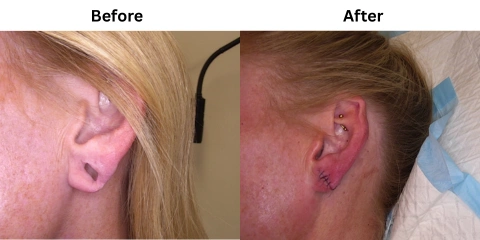
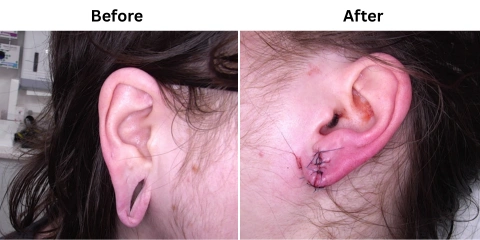
- The torn or stretched edges of the ear lobe are carefully trimmed and stitched back together
- The whole process usually takes under an hour
- Stitches are removed after 5 to 7 days
- Most patients are back to normal activities that same day
You may have some mild swelling or tenderness, but this typically settles quickly. Scarring is usually minimal, and with proper care, the area heals beautifully.
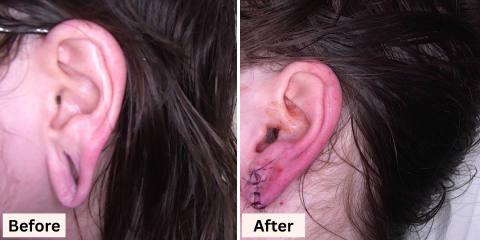
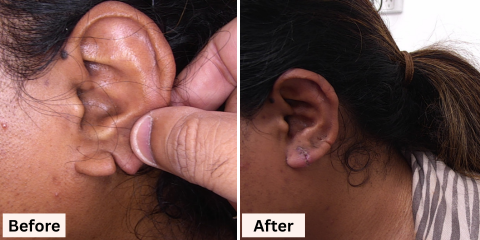
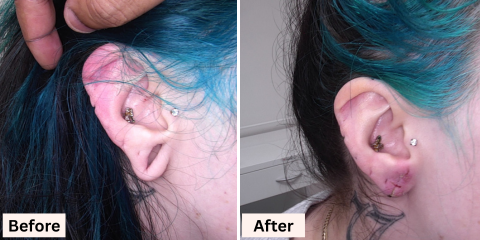
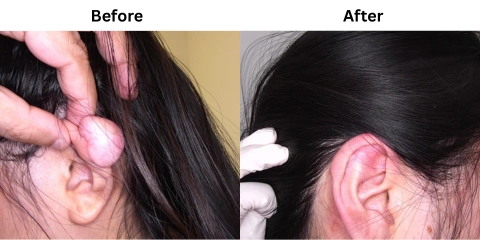
Real Treatment Outcomes


Frequently Asked Question
Not at all. We use local anaesthetic to completely numb the area, so you won’t feel pain during the procedure. You might feel a bit of pressure, and some mild soreness afterwards, but it’s usually very manageable.
Most people are fully healed within one to two weeks. We remove the stitches in about a week, and you’ll be able to go about your day as usual shortly after the procedure.
Yes, but it’s best to wait around three months to give the tissue time to heal properly. We’ll guide you on when and where it’s safe to re-pierce your ears.
There might be a small scar where the incision was made, but it usually fades over time. We use fine sutures and precise techniques to make scarring as minimal as possible.
Facts You Should Know
Skin Cancer Facts in Australia
- 2 in 3 Australians will be diagnosed with skin cancer by age 70.
- Over 2,000 deaths occur each year from preventable skin cancers.
- 1 in 4 men and 1 in 6 women will face melanoma in their lifetime.
- UV exposure is the primary cause, making sun protection essential year-round.
- Annual skin checks are critical for high-risk individuals, with self-screening every 3 months.
- 95% of cases are treatable with early detection.
- Melanoma is the most common cancer for Australians aged 15-39.


