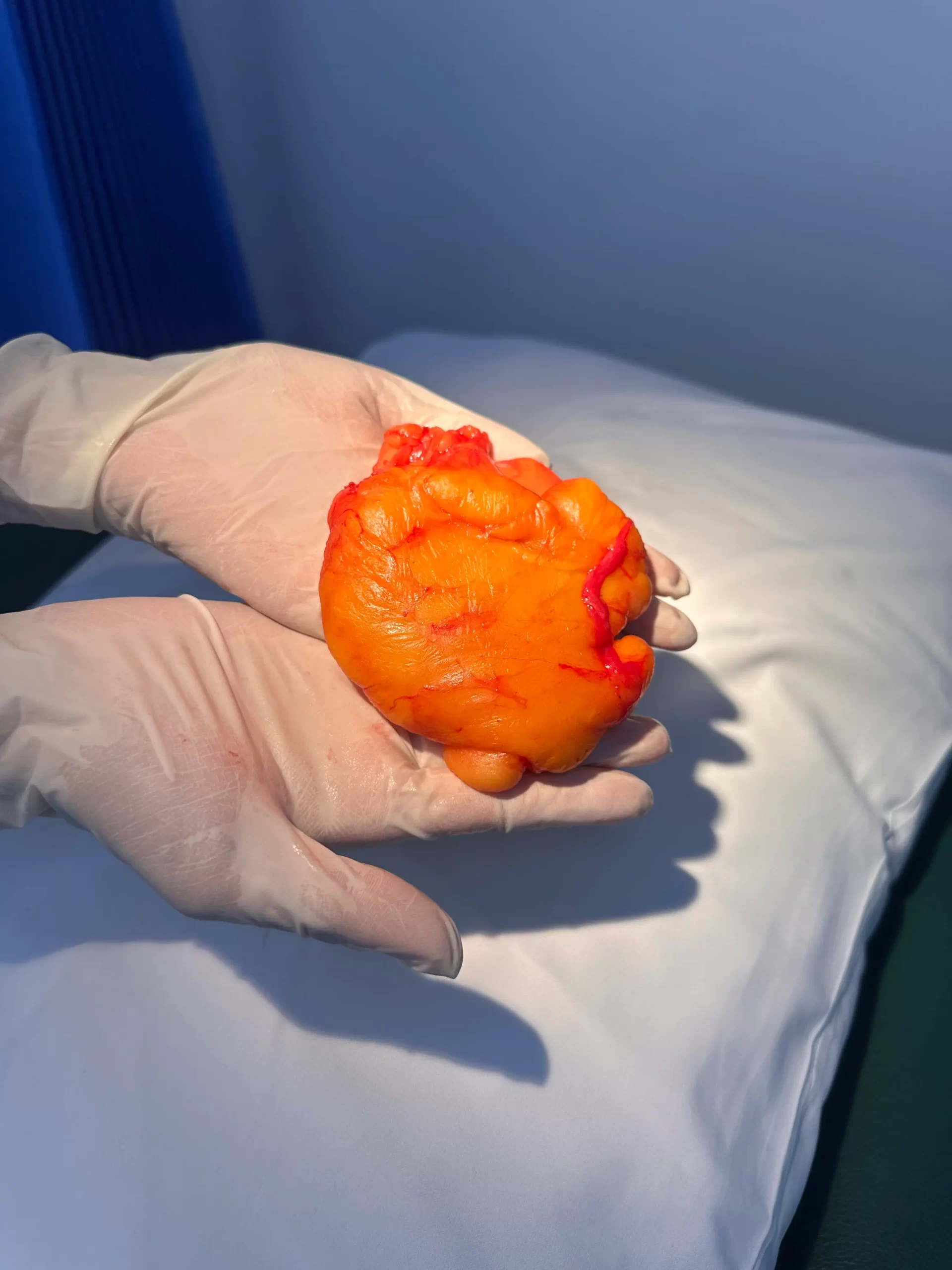
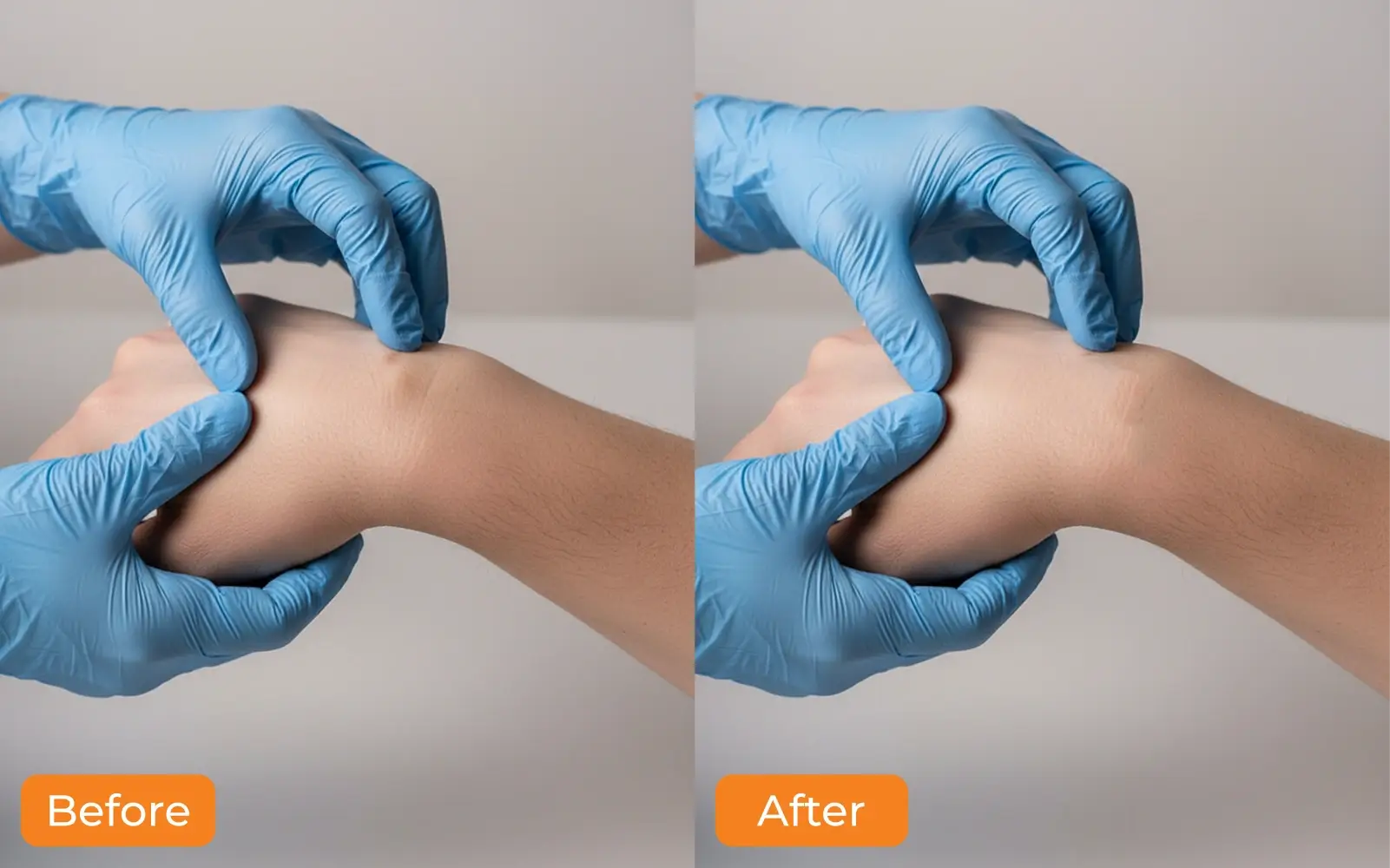
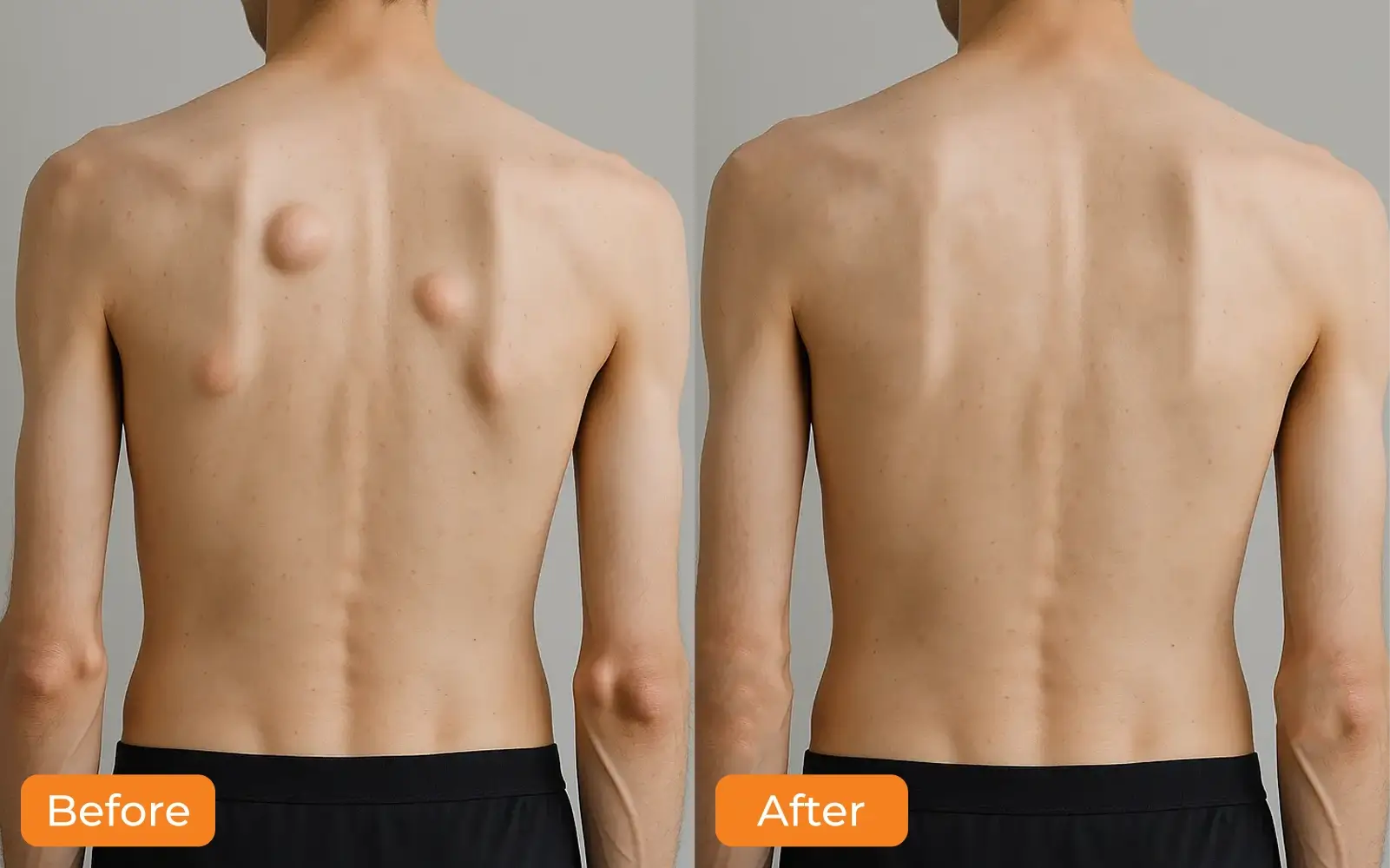
Advanced Skin Doctors provides clinical assessment of suspected lipomas and removal where appropriate. Removal may help if a lump causes discomfort, catches on clothing or concerns you because of its appearance. Your doctor will explain whether treatment at the clinic is appropriate, how the lump would be removed and the expected scar.
A confirmed lipoma is benign and does not always need treatment. If the diagnosis is uncertain, further investigation takes priority over planning a cosmetic procedure.
What is a Lipoma?
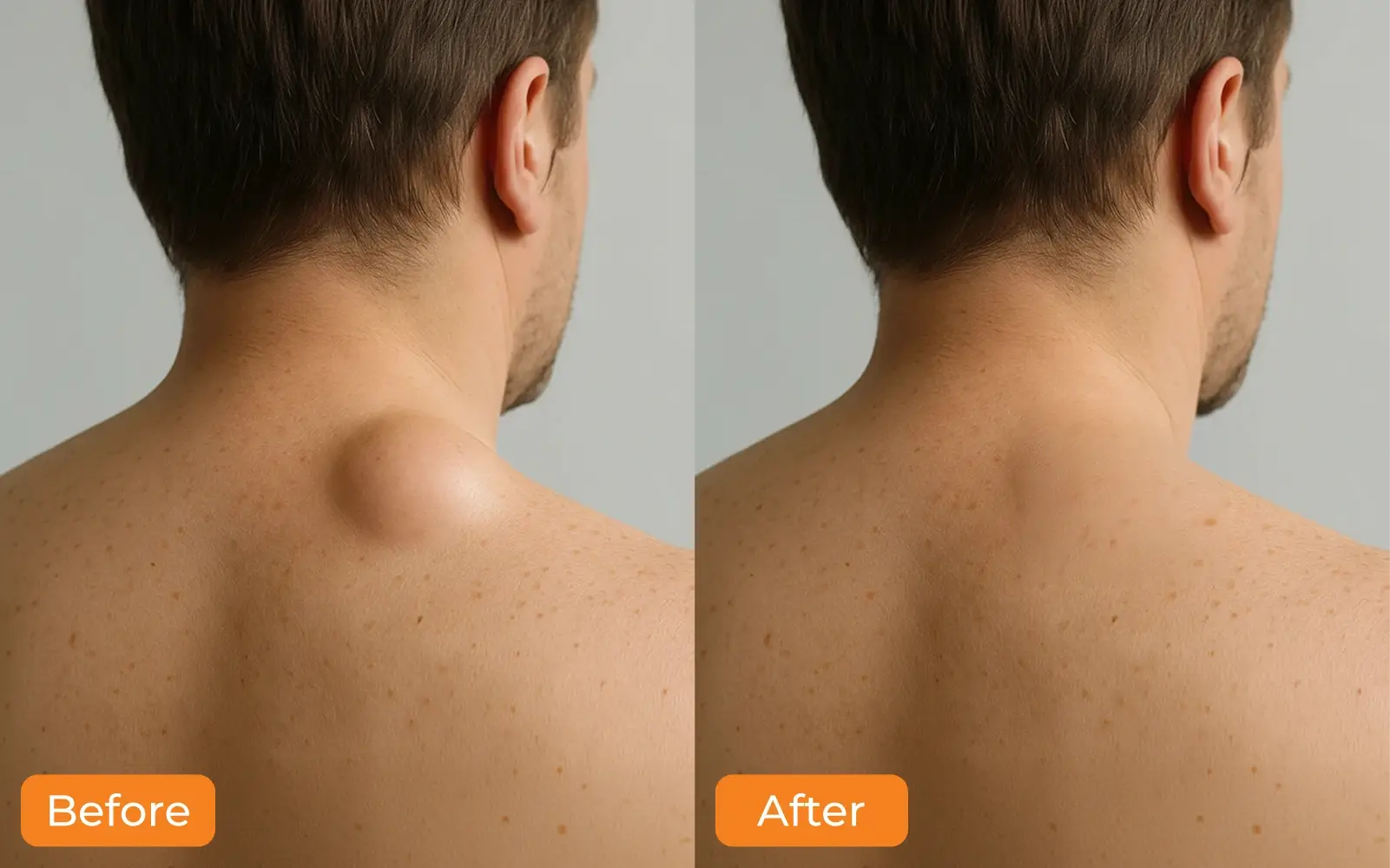
A lipoma is a growth of fat cells, usually beneath the skin. It often feels soft or rubbery and may move slightly when pressed. Lipomas commonly develop on the trunk, shoulders or arms, although they can occur elsewhere.
You cannot reliably identify every lump by touch or a photograph. A lump may be a lipoma, an enlarged lymph node or another type of growth. Clinical assessment helps determine its nature and whether further investigation is needed. Arrange an assessment for a new lump, especially one that is growing, painful, hard or fixed in place.
When lipoma removal may help?
Removal may be worth considering if a confirmed lipoma causes pressure, interferes with movement or is repeatedly irritated by clothing, straps or equipment. You can also discuss removal if the visible lump concerns you.
Observation may be appropriate for a confirmed lipoma that remains stable and causes no symptoms. Your doctor can explain which changes require reassessment.

Assessment before lipoma removal surgery
Your doctor will examine the lump and ask how long it has been present, whether it has changed and what symptoms it causes. Bring any previous scans, pathology reports or records of removal from the same area.
An ultrasound or another investigation may be needed when the diagnosis or depth is unclear. A large, deep, recurrent or unusual lump may require specialist assessment. Prompt assessment is particularly important if growth is rapid or you develop persistent pain or numbness.
Tell your doctor about medicines, blood thinners, allergies, previous healing problems and any tendency to develop raised scars. Do not stop prescribed medicines without medical advice.
Your care at Advanced Skin Doctors
Dr Ankur Bansal performs lipoma removal at Advanced Skin Doctors. His qualifications include a Master of Medicine in Skin Cancer from the University of Queensland and Fellowship of the Royal Australian College of General Practitioners. Ask about his appointment availability when booking.
How lipoma removal is performed
Local anaesthetic and removal
Suitable superficial lipomas can be removed under local anaesthetic. The injection may sting briefly before the area becomes numb. You may still notice pressure or movement; tell the doctor if you feel sharp pain.
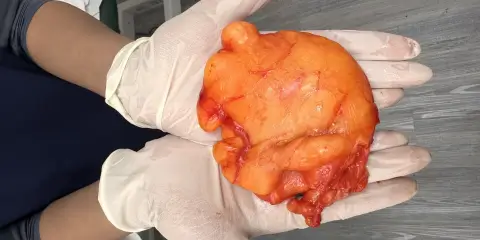
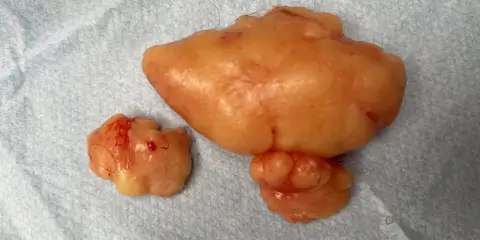
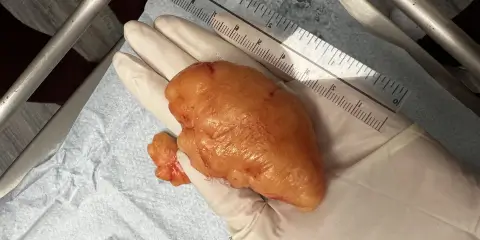
The doctor makes an incision and separates the lump from the surrounding tissue. The aim is to remove the lipoma completely while protecting nearby structures. The incision needed depends on its size, depth and position. Removing a deeper lump can leave a space beneath the skin, so wound closure and follow-up also address swelling, fluid collection and contour changes.
Closing the wound and checking the tissue
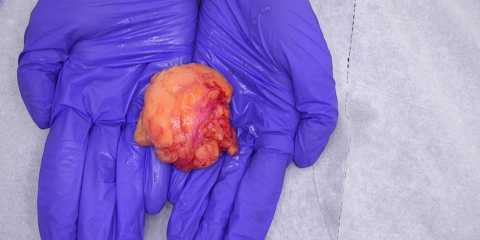
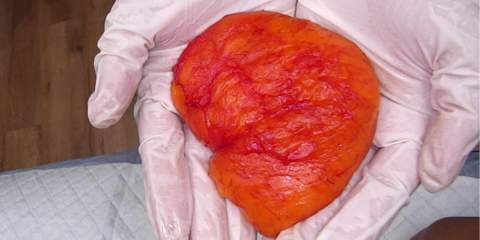
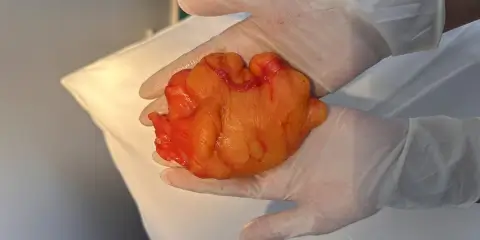
The wound is usually closed with stitches and covered with a dressing. Removed tissue is sent for laboratory examination to confirm the diagnosis. Ask when results are expected and how you will receive them.
Your consultation establishes whether removal at the clinic is appropriate. The appointment length and whether a separate procedure booking is needed depend on the assessment.
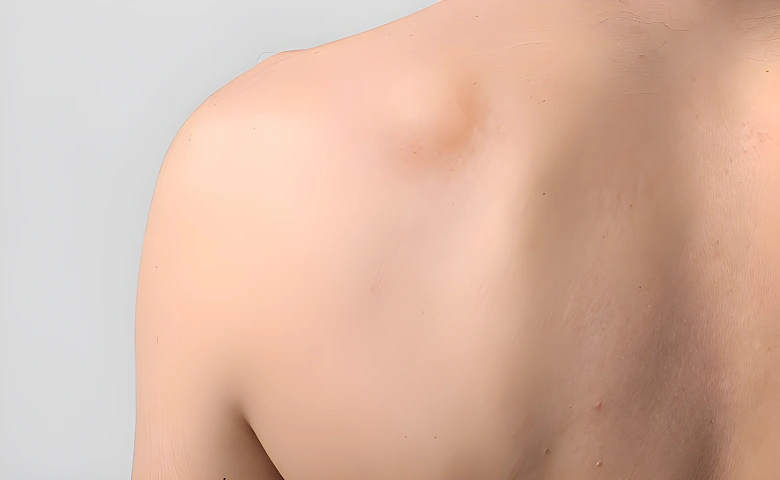
Small superficial lumps and more complex lipomas
A lump just beneath the skin may be suitable for removal in a clinic under local anaesthetic. A lump within muscle, close to a nerve or in a difficult position can need more detailed imaging and a different surgical setting. Size alone does not determine the safest approach.
If specialist or hospital treatment is recommended, the treating team will discuss the surgical setting and anaesthetic options appropriate to your procedure.
How to plan around the location of your lipoma for the removal?
Area or situation | Practical issue to discuss |
Back or shoulder | Pressure from sleeping, chair backs, straps and upper-body movement. |
Arm or near a joint | Lifting, repetitive work and movement that could stretch the wound. |
Face or neck | Nearby structures, scar position and whether specialist care is preferable. |
Several lumps | Which need assessment first and whether staged removal would simplify wound care. |
These considerations guide assessment; they do not mean every lump in these locations can be removed at the clinic.
Recovery after lipoma removal
Recovery depends on the wound location and extent of surgery. A small wound on an area with little movement may need different restrictions from a wound on the back, shoulder or near a joint.
Temporary soreness, bruising or swelling can occur. Follow your individual instructions for dressings, showering, pain relief and wound review. If stitches need removal, the timing will be set for your wound rather than assumed to be the same for every patient.
Work exercise and daily activities
Discuss your usual activities before surgery. Desk work, manual work and exercise place different demands on a healing wound. Ask when you can lift, stretch, swim or return to sport, and whether you need transport home. Being able to go home after a procedure does not mean the wound is ready for strenuous activity.
When to contact the clinic
Seek prompt medical advice for worsening pain, spreading redness, increasing swelling, pus, fever, wound opening or bleeding that does not settle with the instructions provided. Contact the clinic if you are unsure about healing or have not received an expected pathology result.
Scarring and other risks of Lipoma Removal
Surgical lipoma removal leaves a scar. Its eventual appearance depends on the incision, body site and your healing response. Scars can stay pink or firm for a time and may soften and fade over months. Some people develop a thickened or keloid scar.
Other risks include bleeding, infection, fluid collection, altered sensation, wound healing problems and injury to nearby structures. The significance of these risks depends on the lump’s location and depth. The doctor will discuss the risks relevant to your procedure.
Lipoma removal costs
At Advanced Skin Doctors, the fee depends on the time required, size and number of lipomas, location and complexity. There is no single price that applies to every lump.
Before proceeding, ask for an itemised estimate covering the consultation, procedure, pathology and follow-up. Check whether imaging or specialist care would be billed separately. If a Medicare rebate may apply, confirm your eligibility and likely out-of-pocket cost; a rebate is not automatic for cosmetic removal.
Visit Advanced Skin Doctors for Lipoma Removal
Our clinics are located in Narre Warren, Wheelers Hill, Hoppers Crossing and Frankston. Confirm the location and availability of your consultation or procedure when booking.
Clinic | Address |
Narre Warren | |
Wheelers Hill | |
Hoppers Crossing | |
Frankston |
Book a lipoma removal assessment
Call (03) 8202 5959 or book online. Your consultation includes assessment of the lump and discussion of treatment options, potential risks, scarring and aftercare. Tell us where the lump is, how long it has been present and whether it has changed, so we can help you arrange an appropriate appointment.
Frequently Asked Questions
An ordinary lipoma is benign and is not considered a precancerous growth. The reason to assess a changing or unusual lump is to establish what it is, rather than assume that every fatty-looking lump is a lipoma.
Recurrence is possible, especially if some of the lipoma remains. A new lump can also develop elsewhere. Have a lump that returns at the treatment site reassessed before arranging further removal.
Leaving a confirmed, harmless lipoma alone may be an option. Creams and home remedies do not reliably remove a lipoma. Do not squeeze, puncture or cut the lump yourself. Your doctor can explain whether a procedure is appropriate for your situation.
Sometimes, but the number treated depends on their positions, size, the time needed and how several wounds would affect your recovery. A staged plan may be more suitable.
Weight loss does not reliably eliminate a lipoma. If the lump is changing, have it assessed rather than assuming it is part of ordinary weight gain or loss.
You can book an assessment with Advanced Skin Doctors without a GP referral. If further imaging or specialist treatment is needed, your doctor can discuss the next step.
Lipoma Removal Surgery


Gallery