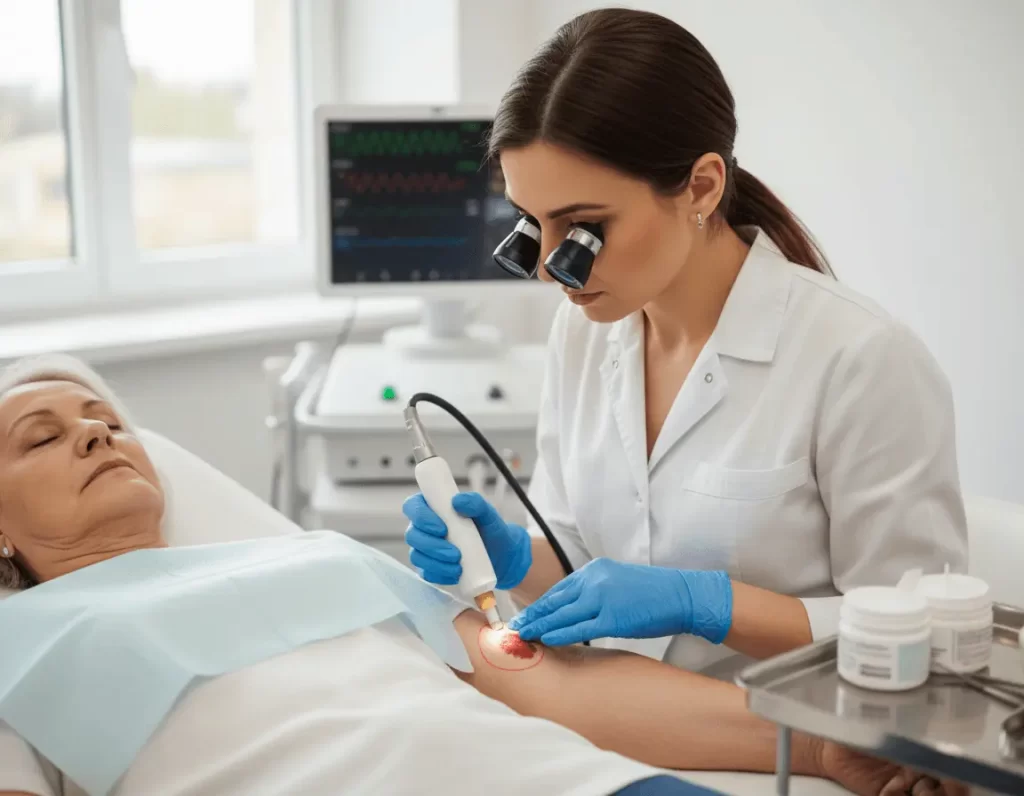
A milia cyst is a small white or cream-coloured bump that forms when keratin becomes trapped just beneath the skin. Milia commonly appear around the eyes, cheeks, forehead and nose. They are usually harmless, but they can persist and may be difficult to distinguish from other skin lesions without a proper assessment. Advanced Skin Doctors provides doctor-led milia removal and milia treatment in Melbourne at clinics in Narre Warren, Wheelers Hill, Hoppers Crossing and Frankston. Your doctor will first confirm what the bumps are, discuss whether treatment is necessary and explain the options, likely outcome, fees and potential risks relevant to your skin.
If the lesions are suitable for treatment, Ellman Pelleve radiofrequency electrosurgery may be used to precisely treat individual milia. It is a radiofrequency procedure, not a laser treatment. Results and recovery vary, and treatment is only recommended after clinical assessment.
What are Milia Cysts?
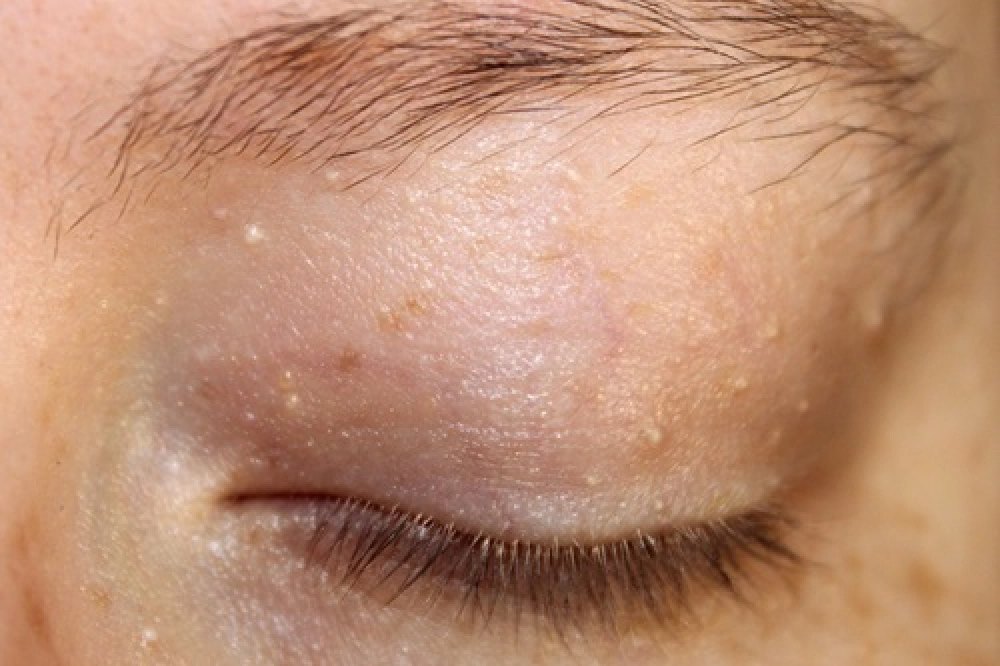
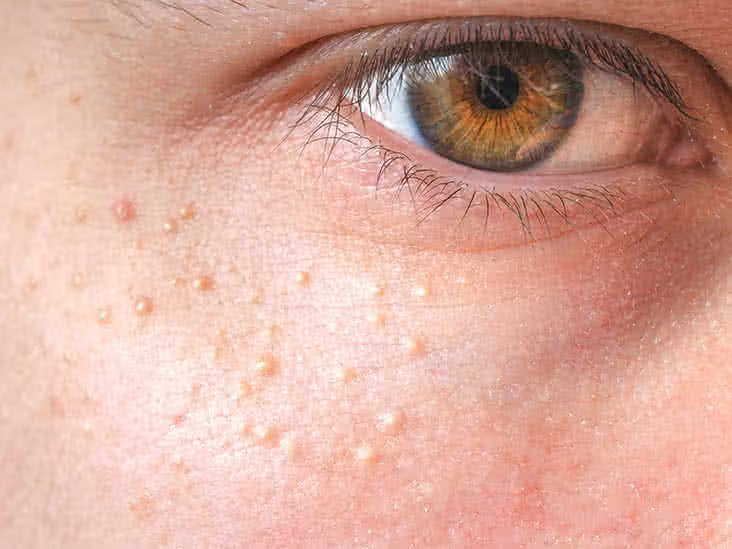
A milium is a small superficial cyst containing keratin, a protein found naturally in the skin. When several are present, they are called milia. They commonly appear as firm, pearly white or yellowish bumps beneath the surface of the skin and are often seen on the eyelids, cheeks, forehead and nose.
Milia are not the same as acne or whiteheads. They do not form from an inflamed or blocked pore in the same way, and squeezing them at home may injure the surrounding skin without removing the cyst. Milia can occur at any age. Some clear without treatment, while others remain for months or longer.
Types of Milia Cysts
Milia can develop in several patterns. Identifying the type and checking for a possible trigger can help the doctor decide whether observation, radiofrequency treatment or another approach is appropriate.
- Primary milia arise without a clear preceding injury and commonly occur on the eyelids, cheeks and forehead in children or adults.
- Secondary milia can form while the skin is healing after a burn, blister, rash, injury or procedure.
- Neonatal milia are common in newborns and usually clear without treatment. Procedures used for adult milia are not appropriate for newborn skin.
- Milia en plaque is an uncommon pattern in which multiple milia occur within a raised or inflamed patch and may require a different assessment and treatment plan.
Why Milia Develop?
Primary milia can form without an obvious trigger when keratin becomes trapped close to the skin’s surface. Secondary milia may develop after skin damage or during healing. Factors that may be associated with milia include:
- Natural keratin becoming trapped beneath the outer layer of skin
- Skin healing after a burn, blister, rash or other injury
- Changes following certain skin treatments or prolonged use of some topical products
- A tendency to develop milia around the eyelids or cheeks
Having milia does not necessarily mean that you have poor hygiene or an unsuitable skincare routine. During your consultation, the doctor can assess the pattern and discuss whether any avoidable trigger appears relevant
When to arrange a medical assessment
Many milia do not require treatment. An assessment may be useful if the bumps persist, occur in a sensitive area, are changing, cause concern or if you are uncertain that they are milia. Several conditions can resemble small white or skin-coloured bumps, including comedones, syringomas, xanthelasma and other benign or potentially significant lesions.
Seek prompt medical advice if a spot grows quickly, bleeds, becomes painful, repeatedly crusts, changes colour or looks noticeably different from nearby lesions. These features do not automatically indicate skin cancer, but they should not be assumed to be milia without examination.
How radiofrequency milia removal works
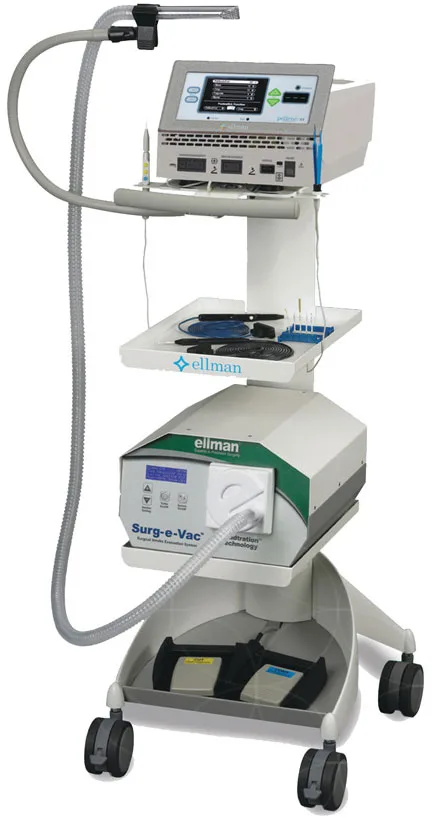
Advanced Skin Doctors uses Ellman Pelleve radiofrequency electrosurgery for suitable benign raised skin lesions. For milia, controlled radiofrequency energy can be used by the treating practitioner to access or treat the small cyst while limiting unnecessary treatment of nearby skin. The exact technique depends on the number, size, depth and location of the lesions.
Pelleve is not a laser. Radiofrequency and laser devices use different forms of energy, so the page and booking pathway should describe this service as radiofrequency milia removal or radiofrequency electrosurgery. Your doctor will advise if this method is appropriate. Observation or another management approach may be recommended when treatment is unnecessary or the lesion is unsuitable.
Milia extraction Melbourne patients should understand
Milia extraction is a general term used for procedures that open or treat the surface of a milium so the trapped keratin can be removed. Traditional manual extraction may use a sterile needle or fine blade. Advanced Skin Doctors uses Ellman Pelleve radiofrequency electrosurgery for suitable milia rather than advertising a routine manual extraction service.
The doctor will determine whether radiofrequency treatment is appropriate after examining the lesion. The exact approach may differ for milia near the eye, clustered lesions, deeper bumps or lesions that do not have a typical appearance. If the diagnosis is uncertain or radiofrequency treatment is unsuitable, another management option or referral may be recommended.
What to expect at your appointment
- Assessment and diagnosis. The doctor examines the area and checks that the bumps appear consistent with milia rather than another condition.
- Suitability discussion. Your medical history, skin type, lesion location, expected outcome, alternatives and risks are considered. Treatment may not be recommended for every patient or every lesion.
- Procedure planning. If radiofrequency removal is appropriate, the doctor explains the procedure and whether local anaesthetic is likely to be needed.
- Treatment. Suitable individual lesions are treated with the Ellman Pelleve radiofrequency system. Appointment duration depends on the number and location of the milia.
- Aftercare. You receive instructions for cleansing, protecting the area and managing expected redness or crusting. Follow-up is arranged when clinically indicated.
Recovery and Aftercare
The treated area may be red, mildly swollen, tender or crusted during early healing. Recovery time varies with the number and position of the treated lesions, individual healing and the technique used. Avoid picking or rubbing the area, and follow the wound-care and sun-protection instructions provided by the clinic.
Your doctor will explain when skincare, makeup, swimming and exercise can be resumed. Contact the clinic if you develop increasing pain, spreading redness, discharge, unexpected bleeding or another symptom that concerns you.
Possible Risks and Limitations
All procedures carry potential risks. These may include temporary redness, swelling, discomfort, crusting, infection, bleeding, delayed healing, changes in skin colour and scarring. A treated milium may recur, and new milia can develop elsewhere. More than one appointment may be needed when there are numerous lesions or when staged treatment is more appropriate.
The likelihood and significance of these risks differ between patients. Your doctor will discuss the risks that apply to your skin, the treatment area and your medical history before you decide whether to proceed
Why choose Advanced Skin Doctors
- Doctor-led assessment before treatment, helping confirm that the lesion is consistent with milia and suitable for radiofrequency removal
- A medical team with published qualifications in general practice, skin cancer medicine, dermoscopy and skin procedures
- Ellman Pelleve radiofrequency electrosurgery available for suitable benign raised skin lesions
- Four Melbourne clinic locations with online appointment booking
- Clear discussion of treatment options, potential risks, expected recovery and fees before proceeding
Milia consultation fees and Medicare
The cost of assessment and treatment may depend on the number, size and location of the milia and the complexity of the procedure. Medicare eligibility can depend on the consultation and the clinical circumstances. Ask the clinic about current fees, likely out-of-pocket costs and Medicare eligibility when you book. Treatment should not be assumed to attract a Medicare rebate when it is undertaken for cosmetic reasons.
Milia removal clinics across Melbourne
Appointments are available at all four Advanced Skin Doctors clinics:
Frequently Asked Questions
No. Milia are small cysts containing keratin, while whiteheads are a type of acne caused by a blocked pore. Because other bumps can look similar, an assessment is useful when the diagnosis is uncertain.
Not always. Milia are usually harmless, and some resolve on their own. Treatment may be considered when they persist or are a concern, provided the doctor confirms that removal is appropriate.
Trying to squeeze, pierce or cut a bump at home can injure the skin and may cause infection, pigmentation changes or scarring. It can also delay assessment if the lesion is not actually a milium.
Milia commonly occur around the eyelids, but treatment in this area requires careful assessment because the skin is delicate and close to the eye. The doctor will determine whether the lesion and its location are suitable for treatment at the clinic.
No. Ellman Pelleve is a radiofrequency electrosurgical system. It does not use laser energy. The treating doctor can explain why radiofrequency treatment may or may not be suitable for your lesions.
Comfort varies with the treatment area and technique. You may feel brief discomfort, and local anaesthetic may be considered when appropriate. The clinic will explain what to expect before treatment begins.
That cannot be guaranteed. The number, depth and location of the lesions affect treatment planning. Some patients may need staged treatment or a further appointment, and new milia may develop later.
Medicare eligibility depends on the service and clinical circumstances. Cosmetic treatment may not be covered. Ask the clinic about current fees, possible rebates and expected out-of-pocket costs before your appointment.


Facts You Should Know
Skin Cancer Facts in Australia
- 2 in 3 Australians will be diagnosed with skin cancer by age 70.
- Over 2,000 deaths occur each year from preventable skin cancers.
- 1 in 4 men and 1 in 6 women will face melanoma in their lifetime.
- UV exposure is the primary cause, making sun protection essential year-round.
- Annual skin checks are critical for high-risk individuals, with self-screening every 3 months.
- 95% of cases are treatable with early detection.
- Melanoma is the most common cancer for Australians aged 15-39.